Studio Z
  • Home
  • About
    • About Studio Z
    • Artists in Residence
    • Purchasing Tickets
    • Accessibility
    • Neighborhood Ammenities
    • Zeitgeist
    • Event Archive
  • Calendar
  • Rent Studio Z
  • Directions & Parking
  • Contact
  • Blog


STUDIO Z Blog

A PROJECT OF ZEITGEIST NEW MUSIC

Jonathan Posthuma on "Paul Klee: Painted Songs"

10/10/2019

0 Comments

 
Composer Jonathan Posthuma will present a recital of premieres from his Paul Klee: Painted Songs series featuring local musicians at Studio Z on Oct. 17, 2019. We welcome Posthuma as a guest blogger to share insight on this ambitious project and examples of Klee's work. 

​Paul Klee: Painted Songs is an ongoing series of instrumental chamber works inspired by the visual art of Paul Klee. Started in 2011, the series has grown into an expansive project – with around 30 of the planned 165 works completed. Over the years, I have added to the series, continuing to draw on the wealth of inspiration from Klee's images, which are filled with musical references, textures, colors, and symbols that closely link musical concepts with Klee's philosophy of visual art. To me, these pieces are musical settings of visual poetry, hence "painted songs." What continues to fascinate me about Klee is both the diversity and consistency of his total body of work. Throughout his vast career, certain ideas continue to resurface and find new applications. In this spirit, Paul Klee: Painted Songs continues to expand, ever exploring the poetry of his work through musical interpretation.
 
What draws you to Paul Klee?
Everything! His works are incredibly varied, but instantly identifiable. He practically wrote the textbook for the theory of color, line, and texture, and though sometimes abstract, his work doesn’t try to push you away – it draws you into a world of fantasy and is often very child-like, even impish at times. He is able to balance the purity and simplicity of his subjects with clever and direct titles, and though his work rigorously follows its own principles, it isn’t academic or overly dense. Klee was a trained musician, loved classical music, and often played his violin for hours before beginning to paint. The reverse is true for me – by studying his work, the music starts to flow more easily.
 
What is your favorite painting by Paul Klee?
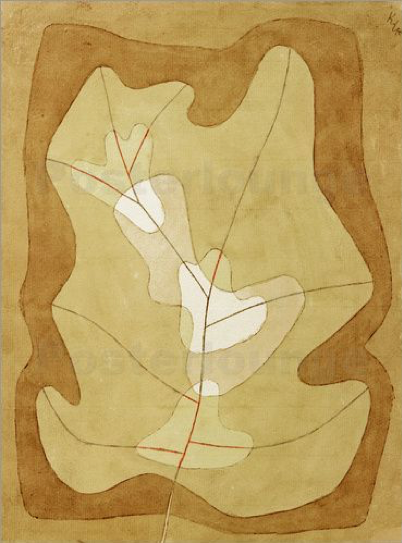
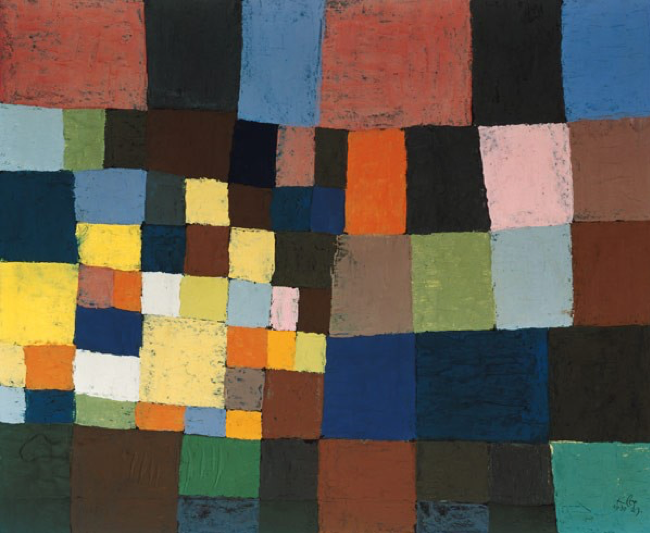
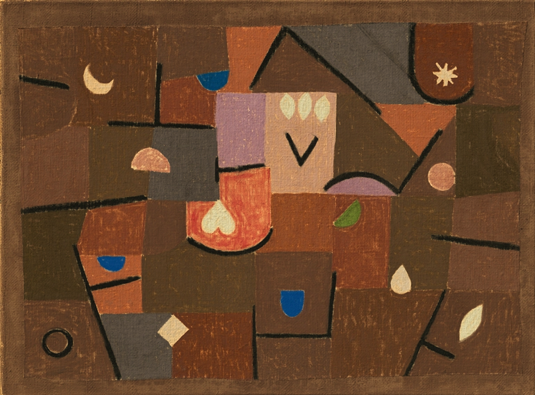
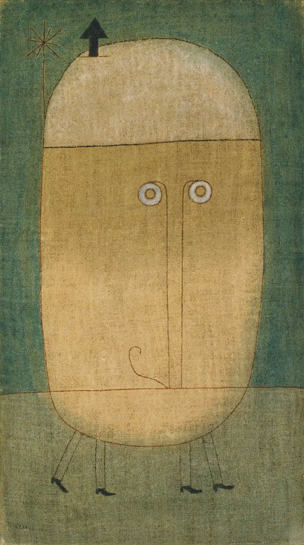
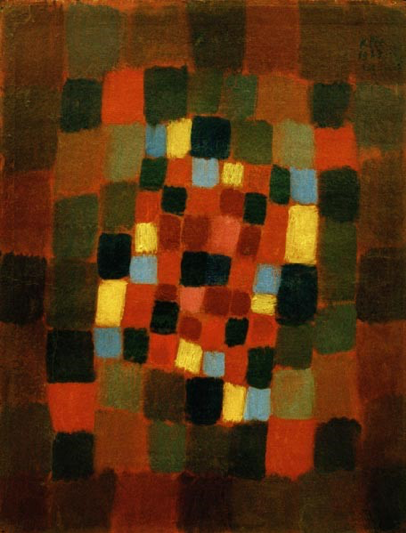
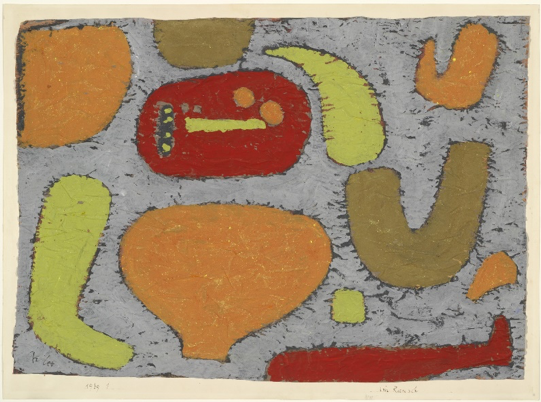
There are so many incredible works that I’ve grown to love by Klee, but I am partial to Klee’s works between 1920 and 1930, which encompass his time as a teacher at the Bauhaus in Weimar (1920-1924) and then when the school was relocated to Dessau after being shut down by rising tensions and right-wing extremists (1925-30). Those years of applied study, exploration, and lecturing alongside colleagues like Kandinsky yielded vast and diverse results, and then when his teaching load was reduced, those explorations blossomed. Perhaps my favorite style of Klee is seen in “Mask of Fear,” “Illuminated Leaf,” and “Ghost of a Genius” where thinly applied washes of color are outlined by finely-sketched lines. His “magic squares” also fascinate me (such as “Colorful Flower Beds” and “The Blooming Garden”) but I respond more strongly to his more figurative and representative works, especially those of flowers and birds, subjects which have always fascinated me as well. The works from his last few years (after 1935 in particular) have always deeply troubled me and though I am including many in the series, they are more raw and cryptic than his earlier work. “Intoxication” and “Hidden Treasures” are among those works, which emphasize dark lines, patches of bold colors, and are more glyph-like than figurative. Those works are often considered Klee’s response to the trauma of the Nazi regime and WWII as well as his own physical pain from a series of illnesses – perhaps because the works are more visceral, it is more difficult for me to find a musical response that is fitting.
 
Why 165 works? How many are completed?
This number is largely symbolic and represents the number of squares in “Ancient Sound,” which is No. 165 in the catalogue. Over the years, I have reordered and renumbered the works multiple times, but this current ordering includes a wide range of chamber ensembles, ranging from solos up to large flex-instrumentation ensembles. Beyond the 165, there are other plans as well, including “galleries” that have more of a through-line or plot and are designed to be used for dance or theatrical productions. Currently, there are around 30 completed pieces are around 12 have been premiered.
 
Do you have synesthesia?
No, not in the sense that other composers or artists have described. But I do have strong associations with colors, textures, shapes, and lines that I respond to when composing. Certain colors are brighter and darker, more intense or more muted, which correspond with certain harmonies, dynamics, or instrumental colors. Certain lines or textures have a gesture or a density that is very relatable to music. Certain images or symbols seem to guide my musical response as well (e.g. eyes are song-like, hands are always searching, feet are rhythmic, plants grow and decay, fish, birds, and mammals have different types of movement, etc.) None of these associations are completely fixed and remain very flexible, but I have my own tendencies that have become somewhat self-referential as I respond to these ideas found through Klee’s work.
Picture
Picture
Picture
(from left to right)
No. 21 “Mask of Fear” (Maske der Furcht, 1929)
No. 9 “Illuminated Leaf” (Belichtetes Blatt, 1929)
No. 98 “Ghost of a Genius” (Gespent eines Genies, 1922)
 
Examples of Klee’s work in the 1920s using thin layers of paint and finely-sketched lines.
​
Picture
Picture
​ (from left to right)
No. 161 “Colorful Flower Beds” (Buntes Beet, 1923)
No. 158 “The Blooming Garden” (Der blühende Garten, 1920)
 
Examples of Klee’s “Magic Squares”
​
Picture
Picture
(from left to right)
No. 18 “Intoxication” (Im Rausch, 1939)
No. 89 “Hidden Treasures” (Kleinode, 1937)
 
Examples of Klee’s late work, which is more cryptic and visceral.

​

JONATHAN POSTHUMA
PAUL KLEE: PAINTED SONGS

Oct. 17  •  7:30 p.m.  •  $15  •  Tickets

A recital of premieres from Jonathan Posthuma's Paul Klee: Painted Songs series featuring local musicians.

Eri Isomura, marimba
Devan Moran, violin
Amelia Smith, clarinet
Jonathan Posthuma, composer / piano

Paul Klee: Painted Songs is a ongoing collection of chamber music inspired by the visual art of Swiss painter Paul Klee. Selections include solos for marimba, violin, and clarinet as well as ensemble works featuring improvisation. More information here.  ​
0 Comments

Interview with Buck McDaniel

9/10/2019

0 Comments

 
Cleveland-based composer Buck McDaniel will make his Minnesota debut next week with the premiere of Scherzo in Four Movements, his new work for Zeitgeist that will premiere at the annual Here & There concerts Sept. 19-22. Zeitgeist intern Tyler Schultz interviewed McDaniel about his new work and the Cleveland music scene. 
​
Picture
Were you able to collaborate with Zeitgeist from a distance while you were composing this new piece? What was that process like?

I’m lucky to have been acquainted with the members of Zeitgeist for several years now. They commissioned (and beautifully recorded) Andrew Rindfleisch’s, my teacher’s, seminal work Nightsinging, and they shared a bill with my ensemble as part of the 2018 Re:Sound Festival here in Cleveland. Heather Barringer, Zeitgeist Executive Director and percussionist, contacted me and revealed they liked my set at Re:Sound and asked if I’d be interested in writing a work for Zeitgeist. She suggested a suite of several miniatures and asked if I was considering any extra-musical ideas for a work.


​Tell us about your new work for Zeitgeist.

Scherzo in Four Movements came about due to Heather’s suggestions on form. The entire piece obsesses over a Reich-ian relationship between the two mallet instruments (think Music for 18 Musicians), yet its harmonic shifts are more severe. The opening section of the second movement, Sections, is a reaction to the texture of the second movement of Andrew Rindfleisch’s Nightsinging. I’ve completely changed the harmonic content, and the work develops in an entirely unrelated way.

A music history professor in school described a Scherzo as a joke, but not necessarily a funny joke. As in, the joke can be cruel, or "on you." The heart of the piece is this absurd Beethoven-ian "BAH-dah-dump" gesture. You’ll hear it when you hear it.


What is the Cleveland music scene like?

What’s amazing about Cleveland is that it’s big enough to do whatever you want, yet small enough that you can get away with anything. There’s a rich community of musicians working in noise and free improvisation--one joy is the normalization of completely batshit crazy music on the same bill with punk rock or whatever. Saxophonist Noa Even and cellist Sophie Benn are both responsible for elevating a lot of that music to a high level with their Cleveland Uncommon Sound Project. Lisa Miralia’s Mysterious Black Box radio show and Devin Hinzo’s fresh perspectives concerts have championed the music of gender-fluid composers and music that doesn’t have an easily-defined home. Rob Galo stays booking crazy shit. It’s all really healthy for the scene.

There have been some fabulously eclectic concerts: I’ve straight up conducted aleatoric electro-acoustic music on the same concert as this glorious hip-hop group Mourning [A] BLKstar, oftentimes including musicians from their ensemble in my own compositions. The tenor Matthew Jones and I are constantly doing messed up things to Handel - in venues ranging from the church, the bar, the club.

I’m sure this happens in other cities, but what’s great about Cleveland is that audiences don’t really see it as being something unusual. They’re never congratulating themselves on being “out there.” There are no rules concerning what kind of music you work in.

There’s of course a rich jazz scene, and the Cleveland Orchestra permeates a lot of the chamber music happening. In my life as an organ recitalist, people can be quite conservative--I don’t really worry about it though!

What motivates you as a composer?

Nico Muhly often describes his job as a composer as creating “a piece of art that is better than the same amount of silence.” If I can fill a period of time with music that’s worth listening to, I’ve achieved that.


Anything you would like to add?

I am beyond excited to be making my Minnesota debut in these concerts. The Twin Cities have historically been a vital incubator of contemporary art, and I’m honored to have created work for these stellar musicians. I look forward to meeting all of St. Paul at Studio Z! 


HERE AND THERE 2019
ZEITGEIST & NO EXIT ENSEMBLE

Sept 19, 7:30 p.m.  •  Weber Music Hall, Duluth, MN​
Sept 20-21, 7:30 p.m. & Sept. 22, 2 p.m.  •   Studio Z, St. Paul, MN
​Tickets/Info
Zeitgeist kicks off the 2019-2020 season with their fifth annual collaboration with Cleveland-based No Exit New Music Ensemble. An exchange of local artistry, the event features Zeitgeist and No Exit performing music by Minnesota and Ohio composers. The program includes Zeitgeist performing music by Minnesotans Tiffany Skidmore, Randy Bauer, Christopher Brakel, and Joshua Musikantow, and a world premiere by Cleveland composer Buck McDaniel. No Exit will present new works by Minnesota composer Philip Blackburn and Czech-American composer Ladislav Kubík. ​
0 Comments

Interview with Tiffany Skidmore

9/9/2019

0 Comments

 
2018-2019 Studio Z Composer-in-Residence Tiffany Skidmore's new work for Zeitgeist, The Psyche and Cupid Miniatures, will premiere at Zeitgeist's Here & There concerts Sept. 19-22. Zeitgeist intern Tyler Schultz interviewed Skidmore about her new work and her compositional influences. 
​
Picture
Tell us about your new work for Zeitgeist, The Psyche and Cupid Miniatures.

The Psyche and Cupid Miniatures are encapsulations of elements from my opera, The Golden Ass, which will premiere on February 21-23, 2020 at Nautilus Music-Theater, and will also be heard as part of the final performance of the completed production. The opera is a modern adaptation of the myth of Psyche and Cupid by Apuleius that combines Apuleius's text with a new libretto by Patrick Gallagher. The Miniatures zoom in on certain characteristic sounds from the opera and re-contextualize, re-imagine, and expand upon those sounds.


What was the most fulfilling aspect of composing this work? What made it challenging?

I'm a huge Webern fan and have always been captivated by his ability to make me feel like I'm stepping into and out of a fully-realized world within the the space of thirty seconds or a minute when I listen to his music. There is a sense that the pieces are just long enough, but not too long. Every note counts. I have tried to create that same sense in these Miniatures, but doing that is extremely challenging. The most fulfilling aspect of composing the work was working with the musicians of Zeitgeist and Alyssa Anderson during the Zeitgeist Composer Workshop last summer and again in rehearsals after the Miniatures were finished. I really enjoy the process of experimenting with different ideas and learning about each musician's unique abilities.


Do you have a favorite instrumentation to write for? Why?

I don't really have a favorite instrumentation to write for. The most important and enjoyable criterion I rely on to make instrumentation decisions (whenever possible), is that of working with musicians of all sorts who are very flexible and who enjoy a challenge. I also really like composing for unlikely combinations of instruments and voices.


Which composers and/or pieces have influenced you the most?

I have been influenced greatly by so many composers! Certainly listening to, studying, and performing Webern, Mahler, Debussy, Stravinsky, Babbitt, Schoenberg, and Stockhausen has made a very clear impact on my music. I performed Mahler's and Debussy's art songs as an undergraduate vocal performance major and still think about those songs all the time. Schoenberg and Webern are such romantics and I love Schoenberg's theatrical bent. All of these composers are also such wonderful technicians! These are elements that have become important in my own music. I have also been heavily influenced by my studies with J. Kevin Waters, Jonathan Middleton, James Dillon, and Chaya Czernowin, and certainly by aspects of their music, as well. J. Kevin Waters taught me about the importance of working every day, rather than waiting for inspiration to strike. Jonathan Middleton gave me permission to break the rules. James Dillon and Chaya Czernowin have helped me to think about the philosophies behind my music and the importance of a solid conceptual foundation.


What is 113 Composers Collective? What does 113's upcoming program look like?

113 is a group of composers and performers who produce concerts, educational workshops for people of all ages, and guest artist residencies. This season will feature an international tour of performances of new works for saxophone by Acute Trio, based in the US and Switzerland with performances in the Twin Cities on October 15-16; the premiere of my opera, The Golden Ass, featuring performances by Quince Vocal Ensemble, Justin Anthony Spenner, and Adam Zahller, and stage direction by Joey Crane, at Nautilus Music-Theater; a performance of new works for percussion and piano by Bent Duo in New York City in April; and the Twin Cities New Music Festival May 27-31, featuring portrait concerts and talks by Steven Takasugi, Anthony Green, Joe Horton, and Bethany Younge, as well as performances of pieces selected from 113's annual call for scores. Our season kickoff event will be hosted at the Wine Thief & Ale Jail and will include free beer and wine tastings and food available for purchase from Anchor Fish and Chips at 4 p.m. on September 20. We'd love to party there with people before the Zeitgeist performance that evening! For more information about these events, our web address is www.113collective.com.


Anything you would like to add?

I'm very grateful to Zeitgeist for the opportunity to serve as Composer-in-Residence and have really enjoyed getting to know, working, and performing with them!
​

HERE AND THERE 2019
ZEITGEIST & NO EXIT ENSEMBLE

Sept 19, 7:30 p.m.  •  Weber Music Hall, Duluth, MN​
Sept 20-21, 7:30 p.m. & Sept. 22, 2 p.m.  •   Studio Z, St. Paul, MN
​Tickets/Info
Zeitgeist kicks off the 2019-2020 season with their fifth annual collaboration with Cleveland-based No Exit New Music Ensemble. An exchange of local artistry, the event features Zeitgeist and No Exit performing music by Minnesota and Ohio composers. The program includes Zeitgeist performing music by Minnesotans Tiffany Skidmore, Randy Bauer, Christopher Brakel, and Joshua Musikantow, and a world premiere by Cleveland composer Buck McDaniel. No Exit will present new works by Minnesota composer Philip Blackburn and Czech-American composer Ladislav Kubík. ​
0 Comments

Liz Pearse: One-Woman Band

8/6/2019

0 Comments

 
Picture
Hi! I’m Liz Pearse, and I want to invite you to a salon concert I’m performing, hosted by Studio Z on Friday, August 16. I will be singing and playing some of my favorite songs from the last 100-or-so years, inspired by the animal kingdom, mathematical equations, and more. The program includes a number of works I’ve commissioned--and one world premiere!

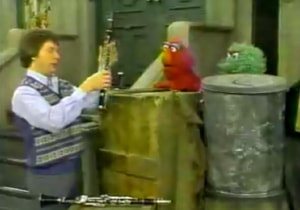
Growing up in Wisconsin, just across the river from my new home of Pickwick, MN, I held an early fascination for specific musicians. One example was Richard Stoltzman, a clarinetist who appeared on Sesame Street. From the age of four onward, I knew I wanted to play clarinet because of that episode, and it became my primary instrument through my entry into college as a music major. Another musician I adored was Dick Van Dyke’s “Bert” from Mary Poppins--the concept of a one-man band was simply irresistible (how much noise can one child make?!). 

Picture
But my favorite musician was always my dad, who spent many Saturday evenings playing piano for his kids while we ran around the house to “Bumble Bee Boogie,”, “Maple Leaf Rag” and the like.

Given these examples, perhaps it seems odd to choose singing as my profession. To me, it makes perfect sense. The human voice is by FAR the most versatile, flexible instrument one may access--as a contemporary singer, I’m often tasked to perform as if I’m a one-woman band! My voice operates very much like a clarinet; similar range, similar proclivity to movement... training as a woodwind player has always informed my vocalization. Last but not least, the piano has always been present. My first music lessons were on the piano, and I spent my entire childhood playing and singing (to accompany myself, my sister, the high school choir, whoever would let me near the keyboard!). 

It is certainly not a unique setup. Countless performers play piano and sing simultaneously, from Nina Simone, to Billy Joel, to Tom Waits, and beyond. It is uncommon in the realm of classical music now, though once it was common on concert stages and salon recitals. I seek to revive self-accompanying in “art song” for a number of reasons. ​

Picture
Picture
Picture
Picture
Of course, it would be much easier if I just asked a professional pianist to work with me, and I love collaborating with pianists! However, I feel there’s something special about solo performance--something singers rarely get to experience. There is great responsibility in making all the decisions regarding a performance. Tangentially, I am interested in fostering song repertoire where the vocal part is more demanding than the piano--it has always seemed unfair that I must ask a pianist to commit to learning exponentially more notes than I must learn, every time I wish to sing a song with piano!

I have performed salon recitals in Chicago, Kansas City, Pittsburgh, and Ann Arbor, and I am just delighted to get to share these songs with you in my new home state. Please join me on Friday the 16th for a light, fun evening of song!

​

LIZ PEARSE
AN EVENING AT THE SALON​

Aug. 16  •  7 p.m.  •  $10 suggested  •  Details
Singing while accompanying oneself at the piano is not a “new” endeavor -- but in the realm of art song, it is certainly unusual. Performer Liz Pearse’s self-accompanied recitals hearken back to the era of the salon: an informal, intimate, and fresh atmosphere in which to absorb songs both old and new. This particular evening presents some gems of 20th and 21st century song, including a centennial celebration of Francis Poulenc’s La bestiaire, alongside newly-commissioned works inspired by members of the animal kingdom. ​
0 Comments

Michael Wittgraf with HASCO Duo

3/25/2019

0 Comments

 
Guest blogger Michael Wittgraf shares the story behind his collaboration with HASCO Duo ahead of their performance on Sunday, March 31 at Studio Z. 
​
Picture
​I hope you can join the HASCO Duo and me at Studio Z on March 31st for an afternoon of improvised electronic music. Amanda DeBoer Bartlett (voice) and Jesse Langen (guitar) of the HASCO Duo bring their improvised electronic magic and blend it with my sound processing environments to create music ranging from the ethereal to the edgy, intermixed with the occasional surprise. You will see and hear interesting texts, guitar pedals, e-bows, and Nintendo Wiimotes.

Jesse and Amanda are featured on the recently released album Manifold, an eclectic collection of my original music from the past 25 years, ranging from solo classical guitar to guitar with electronics to the improvised electronics you will hear in this show. The album will be available that afternoon, and is available on iTunes, Spotify, Amazon, and other outlets.

Jesse and I are from Stearns county in central Minnesota, but we met in 1994 in Chicago when we were students at Northwestern University. I have performed with and written many pieces for him since then, and am extremely pleased to have been able to work with him extensively over the past two years. He is a singular talent who takes the process of learning and studying a piece of music more seriously than anyone I have met. It is a fortunate composer who has a performer treat his music with the degree of detail that Jesse does. 

The original idea for Manifold was an album featuring Jesse on guitar, solo and with electronics. At his suggestion, we brought in Amanda from Omaha for two tracks of improvised music, which has proven to be an extremely good decision. The tracks with Amanda have received more airplay than the others. Jesse and Amanda, besides forming the entirety of the HASCO Duo, are also members of the renowned Chicago-based new music ensemble Dal Niente. 

​This concert is part of a short tour that includes shows in Grand Forks, ND, Chicago, and St. Paul. It is funded by a University of North Dakota Fine Arts and Humanities Scholarship Initiative Grant, administered by the UND College of Arts and Sciences.

Picture

HASCO DUO 
FEATURING MICHAEL WITTGRAF

March 31  •  4 p.m.  •  $10  •  Tickets/info
​
An afternoon of improvised electronic music. The HASCO duo, comprising Amanda DeBoer Bartlett (Omaha, NE) on vocals and electronics and Jesse Langen (Chicago, IL) on guitar and electronics, team up with Michael Wittgraf (Grand Forks, ND) on computer to create an afternoon filled with soothing sounds, interesting words, and many surprises. It is an experience of maximum interaction between performers and their technology.
0 Comments

Eric Stokes Song Contest Winner Ryan David Stevens

2/5/2019

0 Comments

 
Picture
Ryan David Stevens (b. 1992) is an American composer from Minneapolis, Minnesota. They received a B.M. in music theory and composition in 2016 from the University of Northern Iowa, studying under Dr. Jonathan Schwabe and Dr. Alan Schmitz. Stevens takes interest in loosening the definition of what it means to make "high art" music. They often take inspiration from the experimental production and composition styles of noise, electronic, and rock/pop music,  while continuing to push boundaries in the contemporary classical realm of music composition and performance. 

Ryan is one of three winners of Zeitgeist's 24th annual Eric Stokes Song Contest. Named in memory of late composer Eric Stokes, the contest is designed to encourage and celebrate amateur composers throughout the Twin Cities. Ryan's winning composition, Tachypsychia: Circadian, will be performed by Zeitgeist at their annual Playing it Close to Home concert Feb. 8-9 at Studio Z. 

Tachypsychia was originally written as a four-movement piano suite. The second movement, Circadian, has been arranged specifically for Zeitgeist. Tachypsychia is a neurological condition that alters the perception of time during moments of extreme trauma, physical exertion, or altered states of mind. Ryan finds that minimalism tries to achieve a similar goal of distorting time through music. 

Playing it Close to Home

Feb. 8-9, 7:30 p.m.  
Studio Z: 275 East Fourth Street, Suite 200, St. Paul
$15 / $10 students & seniors
Tickets/Info

With winning songs from the Eric Stokes Song Contest plus music by local composer Yohannes Tona, Zeitgeist's annual Playing it Close to Home concert celebrates the wealth of musical creativity found right here in our own backyard. The program includes music by Eric Stokes Song Contest winners Debbie Cushman, Ryan David Stevens, and Dominic Cudd, plus new works by Ethiopian bassist and composer Yohannes Tona, including pieces inspired by Ethiopian folk music and works from his albums 1317 and Sand From The Desert.
0 Comments

Eric Stokes Song Contest Winner Dominic Cudd

1/31/2019

0 Comments

 
Picture
​Dominic Cudd is a 16-year-old singer, songwriter, composer, and multi-instrumentalist from South Minneapolis. He is a sophomore at the Saint Paul Conservatory for Performing Artists, is a member of the Prelude Performance Program at MacPhail Center of Music, and studies voice with Thaxter Cunio. He has been awarded the Mary Ann Kimball Vocal Performance Scholarship at MacPhail the past two years, and is a 2019 winner of MacPhail's Mini-Met Competition. 

In addition to singing, Dominic plays trumpet (including with Minnesota Youth Symphonies), piano, and guitar, and he composes his own songs. He released his first album of original songs (entitled In This Place) in November 2018. Dominic wrote the lyrics and music for the album and performed on vocals, keyboard, guitar and trumpet. Dominic has also composed original jazz compositions, and he recently wrote an original score for an SPCPA production of The Little Prince at Gremlin Theatre. 

Dominic is the youth winner of Zeitgeist's 24th annual Eric Stokes Song Contest. Named in memory of late composer Eric Stokes, the contest is designed to encourage and celebrate amateur composers throughout the Twin Cities. Dominic's winning entry, Composition in B minor, will be performed by Zeitgeist at their annual Playing it Close to Home concert Feb. 8-9 at Studio Z. 

In describing his winning composition, Dominic says: "I love music because it is beautiful and allows me to express deep emotion. There is some sadness in this song but also the idea that creating something beautiful is calming and healing."

Playing it Close to Home

Feb. 8-9, 7:30 p.m.  
Studio Z: 275 East Fourth Street, Suite 200, St. Paul
$15 / $10 students & seniors
Tickets/Info

With winning songs from the Eric Stokes Song Contest plus music by local composer Yohannes Tona, Zeitgeist's annual Playing it Close to Home concert celebrates the wealth of musical creativity found right here in our own backyard. The program includes music by Eric Stokes Song Contest winners Debbie Cushman, Ryan David Stevens, and Dominic Cudd, plus new works by Ethiopian bassist and composer Yohannes Tona, including pieces inspired by Ethiopian folk music and works from his albums 1317 and Sand From The Desert.
0 Comments

Eric Stokes Song Contest Winner Debbie Cushman

1/28/2019

0 Comments

 
Picture
A classical piano student from the age of five, St. Paul-based singer-songwriter Debbie Cushman taught herself to play guitar as an adult. One awesome teacher and a couple of decades later, guitar is her primary instrument and she has written three albums of songs since 2012, all published under the Footfall band name. While Americana is a natural home for most of her repertoire, Debbie is happy to sing and make music across genres; she is equally comfortable with hymns and rock and roll. Debbie plays in a variety of settings and configurations, including as a soloist and with the bands Footfall, Granger’s Moonshine and Wayward Creek. Thanks to the good humor of her band-mates, you may also see her dabbling in harmonica and washboard. 

Debbie is one of three winners of Zeitgeist's 24th annual Eric Stokes Song Contest. Named in memory of late composer Eric Stokes, the contest is designed to encourage and celebrate amateur composers throughout the Twin Cities. Debbie will join Zeitgeist to perform her winning song, Crazy Sky, at Zeitgeist's annual Playing it Close to Home concert Feb. 8-9 at Studio Z. 

Debbie writes about her winning song and her work as a songwriter: 

I wrote Crazy Sky when a friend sent me a summer storm photo--one of those pink and orange and black Midwestern skies after the rain has moved out. Not all songs just come together, but this one wrote itself quickly. The studio additions made by violin and cello (The OK Factor) were genius... so in that sense, I guess the spirit of the piece worked to say what I was trying to get across. 

I credit a lot of my songwriting to two pretty different things: time spent in various choirs over the years, and the study of foreign languages. I've had so many wonderful teachers in both arenas. I'm kind of obsessed with vowel sounds and alliteration and how it affects imagery. I would be hard-pressed to write a poem, but combining words with music makes it easier for me to paint a picture. I see every song as having the potential to be a singular piece of art, both auditory and visual. 

It's incredibly humbling to be a winner in the Zeitgeist song contest. I have such gratitude for all the musicians and my family and friends who have supported me on this musical journey. What an honor. This is great inspiration to keep composing. 

Playing it Close to Home

Feb. 8-9, 7:30 p.m.  
Studio Z: 275 East Fourth Street, Suite 200, St. Paul
$15 / $10 students & seniors
Tickets/Info

With winning songs from the Eric Stokes Song Contest plus music by local composer Yohannes Tona, Zeitgeist's annual Playing it Close to Home concert celebrates the wealth of musical creativity found right here in our own backyard. The program includes music by Eric Stokes Song Contest winners Debbie Cushman, Ryan David Stevens, and Dominic Cudd, plus new works by Ethiopian bassist and composer Yohannes Tona, including pieces inspired by Ethiopian folk music and works from his albums 1317 and Sand From The Desert.
0 Comments

Interview with Babatunde Lea & Steve Hirsh

12/11/2018

0 Comments

 
Rhythm's Mama and Le Voyage, two bands that seek to raise the spirits and defy conventional notions of genres, will come together for performances this Sunday, Dec. 16 at Studio Z. 

Rhythm's Mama is deeply embedded in the African roots of Cuba and beyond, playing Babatunde Lea's original compositions and jazz standards in the rhythms of the African diaspora. Le Voyage's music is composed in the moment, always aiming for the spirit that lies beneath the music.

​We interviewed Babatunde Lea of Rhythm's Mama and Steve Hirsh of Le Voyage to find out more. 


Picture
Questions for Babatunde Lea of Rhythm's Mama: 

Tell us about your experiences with Cuban music.

I grew up in the New York City area and was exposed at early age to Afro-Cuban music and dance bands. I had nine aunts and they'd take me dancing. I knew how to mambo before I could walk. I started playing marching drums at age 11, congas at 13-14. A cousin who was 4-5 years older than me took me to NYC to see bands. I saw Babatunde Olatunji in 1959 and it blew my mind. That's when I  decided I wanted to be a drummer, that that's how I wanted to live my life. Growing up in NYC, I saw everyone. Ray Baretto came to my high school and signed my conga. I saw Eddie and Charlie Palmieri, Tito Puente, Mongo Santamaria. I haven't been to Cuba, but I am still deeply influenced by the music.

How does African culture influence your approach to jazz standards? 

I was so exposed to Afro-based music that it is the foundation of whatever I play. I look for the African-ness in all my music, no matter who I'm working with. That's what I know. I've studied the traditions from Senegal, Cuba, Brazil, Mali. I play all kinds of percussion instruments, trap set, and bata. It's a no-brainer that I'm bringing that to my music. Because the music comes form the psyche of African-American people in this hemisphere, the music is already connected to Africa. The African-ness is already there in jazz; I just look for it. 
​
Picture
Questions for Steve Hirsh of LeVoyage: 

What is your approach to "composing in the moment." 


We just play. Someone makes a sound, someone responds, and off we go. It's conversational--someone starts a conversation, and the rest of us chime in as we are moved to.

How does the group communicate during performance? 

Primarily through sound. Personally, I play with my eyes closed most of the time, so visual cues wouldn't be much use. But we are paying close attention to what each other is saying on their instrument and the communication happens through what we play (or don't play) in response to what we're hearing.

In what ways do you bring out the spirit that lies beneath the music? 

There are lots of different ways to make music. What we refer to as musical genres or styles is about applying a set of rules to sound--rules about rhythm, pitch, harmony, rules about instrumentation, rules about who plays what and when. But all good music is about using those conventions to express feelings, to communicate something about who we are, to play the story of our lives. Some people think that free improvised music has no rules, but it's the opposite--we use all the rules. We just don't confine ourselves to any one set of rules. So, the musicians bring all their musical experience to the table, their experiences with all the different kinds of music they've absorbed, and their life experiences. The goal is to use all the tools available to us to express ourselves, to share our love with each other and with the audience. And to me, that's the spirit behind all music. 
​

RHYTHM'S MAMA AND LE VOYAGE
FAR OUT FAR IN

Dec. 16  •  4 p.m.  •  $20  •  Tickets/Info

0 Comments

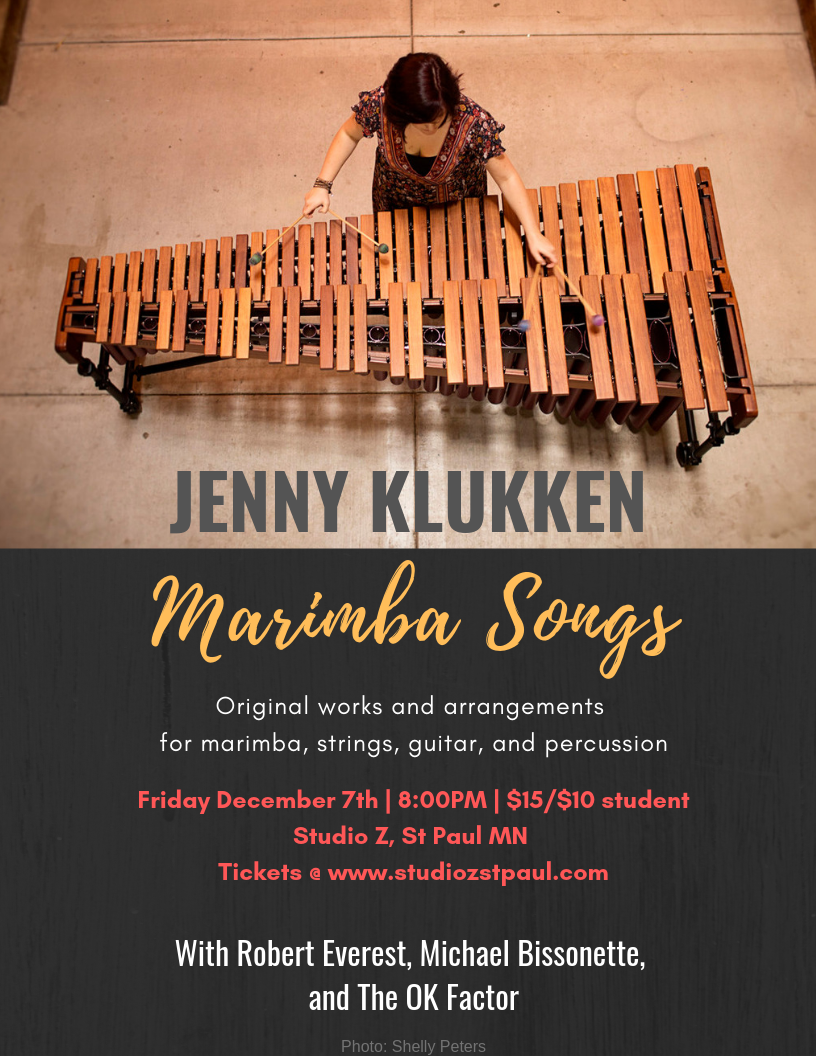
Jenny Klukken's Marimba Songs

12/3/2018

0 Comments

 
Picture
​Jenny Klukken and special musical guests will present an evening of marimba-centered music inspired by classical, Latin, jazz, and American folk music on Friday, Dec. 7 at Studio Z. Jenny's compositions and arrangements give a new voice to the modern marimba, an otherwise classical/repertoire-based instrument, and leave room for improvisation and free-play.

In the spring of 2018, Jenny Klukken traveled to Paris to study marimba, composition, and improvisation with Eric Sammut, and to compose works for marimba that incorporated her unique approach to the instrument. The Studio Z performance will premiere works she composed in Paris, plus various works that have been collectively arranged by Jenny Klukken and guest musicians Robert Everest (guitar/vocals), Michael Bissonette (percussion), and The OK Factor (violin: Karla Colahan, cello: Olivia Diercks). We interviewed Jenny to learn more about the new works and her artistic background and inspirations. 


Where do you find inspiration for your unique style of marimba composition? 

I played the piano as a child and studied classical percussion in college. I discovered the marimba when I was a freshmen in college and it became clearer to me throughout my schooling that it was my main instrument. It wasn’t until after college that I found myself wanting to compose for myself. I would search through repertoire, searching for inspiration for what to do next with my instrument. While I appreciated other marimbists’ craft, none of the repertoire felt like something I was compelled to play myself. I never formally studied composition, but have been writing songs and geeking-out about music theory since I was a kid. I grew up playing and listening to a lot of jazz, bluegrass, and gospel music, so writing and playing tunes instead of through-composed pieces has always felt like home. I hesitate to call myself a full-on jazz musician, but more of a jazz/world/classical/cross-over instrumentalist and composer (though that is much more of a mouthful, isn’t it?).


How are you able to incorporate other genres into your compositions while keeping your own unique voice and style? 

I most often find my compositions sounding like Latin, American folk, and/or jazz music. The last two are pretty unusual to find a marimba in, which is fun to play with. I love to pull rhythmic ideas from these genres while interjecting passages that could only be pulled off by a marimba. The years in college I spent practicing four-mallet permutation exercises will pop up into something that otherwise sounded very non-classical. I think it is fun to write music that doesn’t completely slip into one genre and to balance the line between sounding extremely rehearsed and improvisational. I constantly aim to be able to improvise on the marimba with the same virtuosity


Tell us about your experience studying with Eric Sammut in Paris. 

I received the “Next Step” grant last year from the Metropolitan Regional Arts Center to travel to Paris and study marimba, composition, and improvisation with Eric Sammut for one month. If you don’t know Eric Sammut, he is a pillar of the marimba world; a phenomenal composer and performer who first became widely known in the early 90’s, and one of the only improvising marimbists I know. I rented a small flat in Paris (with just enough room for a 5 octave marimba) that was walking distance to Eric’s home. Twice a week, Eric would meet me there for a 2+ hour lesson. Most marimbists know that Eric is an extraordinary player and composer, but I soon learned that he is also an incredibly kind, humble, and generous person. Lessons alternated between improvisation exercises and workshopping compositions. Our time usually ended with espresso and chats about Eric’s interesting life and inspirational approach to music and the marimba. I have always had to translate conversations about accompanying and soloing through my marimba lenses, and this was the first time I talked to someone who had explored the marimba’s capabilities in a jazz ensemble setting. His thoughts about voicing chords, arranging, and soloing according to the marimba’s timbre were groundbreaking for me. Outside of practicing and composing, I spent my time exploring Paris.

​

How did you go about collectively arranging pieces with the five guest musicians?

I’ve played with all of these musicians before, but pairs of them have never performed with each other. It was helpful to have a musical history with them all as I began writing for each of them specifically. All of the pieces that we’re playing on December 7th are written as charts, save one through-composed piece I wrote last spring. I started getting ready for a concert like this while I was in Paris and spent hours writing out through-composed charts for everyone. Once I got into my first rehearsal with this music, it was very clear to me that this room of musicians (including myself) was going to function better off of charts. I feel more at home reading charts rather than composed parts, and I also enjoy hearing musicians put their own personal touches on my ideas. I am very happy with where these pieces ended up. I enjoy the thrill of not knowing exactly how everything is going to go: how my cadenza might end up, when a new burst of energy will arise, or when there might be a musical shift between players. I think the classical marimba world could use more of this; more free-playing and making music for the moment. This is where I have found my voice as a musician, and I look forward to sharing it with everyone at Studio Z that night. 

JENNY KLUKKEN AND GUESTS
MARIMBA SONGS

Dec. 7  •  8 p.m.  •  ​​$15 / $10 students •  Tickets/Info
Picture
0 Comments
<<Previous
Forward>>
    Picture

    Studio Z

    A performance space for the music of our time. A project of Zeitgeist New Music.


    SpiRit of The Times

    YOU get to be the critic! Write a review of any event you attend at Studio Z

    Write a Review

    Categories

    All
    Lowertown Listening Sessions
    Stockhausen
    Zeitgeist


    Archives

    September 2021
    August 2021
    March 2020
    February 2020
    January 2020
    December 2019
    October 2019
    September 2019
    August 2019
    March 2019
    February 2019
    January 2019
    December 2018
    November 2018
    October 2018
    September 2018
    July 2018
    June 2018
    April 2018
    March 2018
    February 2018
    January 2018
    October 2017
    June 2017
    May 2017
    April 2017
    March 2017
    February 2017
    January 2017
    December 2016
    November 2016
    October 2016
    August 2016
    July 2016
    May 2016
    March 2016
    February 2016
    December 2015
    October 2015
    April 2015
    March 2015
    February 2015
    January 2015
    October 2014
    September 2014
    August 2014
    June 2014
    May 2014
    February 2014
    November 2013
    October 2013
    September 2013
    August 2013
    May 2013
    March 2013
    February 2013
    October 2012

    RSS Feed

Picture
Studio Z  •  275 East Fourth Street Suite 200, Saint Paul, MN  •  (651) 755-1600